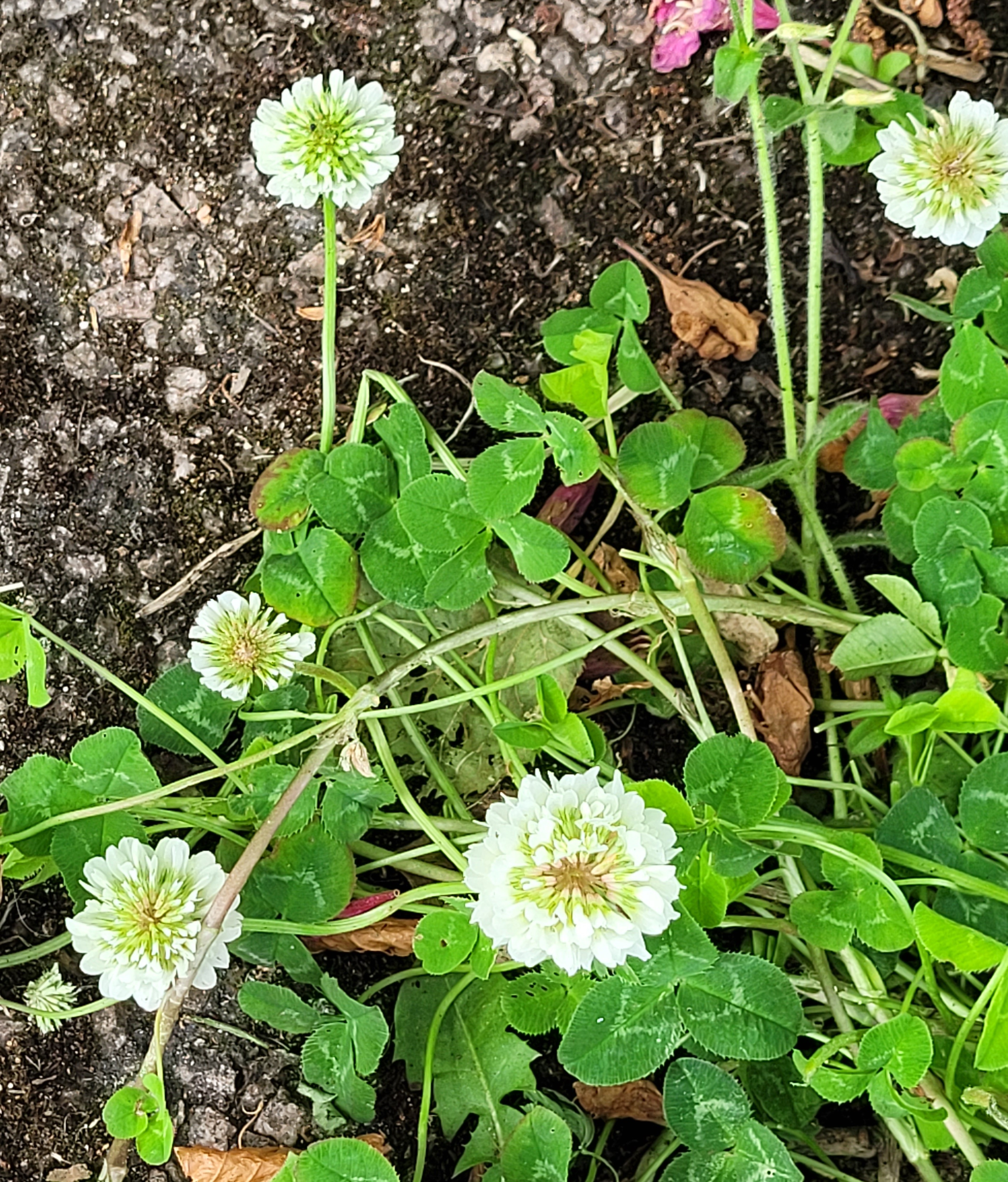
Flower Properties
| Property | Value |
|---|---|
| English Name | White Clover |
| Scientific Name | Trifolium repens |
| MainColor | White |
| PlantType |  Herb Herb |
| Distribution |  Native Native |
| Season Found | May (Non - Non) |
| ImageUrl | Trifolium-005 |
| Photographer | DP |
| Location Found | Abbots Langley |
| Country Found | UK |
| Photo Quality | A |
Flower Details
Description
White clover is a low-growing perennial plant, often found in lawns and fields. It features trifoliate leaves and small, white flower heads that can sometimes have a hint of pink. The plant is known for its creeping stems that root at the nodes.
Distribution
Native to Europe and Central Asia, white clover is now widespread across temperate regions worldwide, often found in grasslands, roadsides, and lawns.
Medicinal/Other Uses

✅ White clover has been used in traditional medicine for its anti-inflammatory properties and as a diuretic. It is also used as a forage crop and for soil improvement due to its nitrogen-fixing ability.
Edibility

Edible - young leaves and flowers can be consumed raw or cooked, often used in salads or as a tea.
Human Toxicity
Non_ToxicNon Toxic - generally safe for human consumption in typical amounts.
Pet Toxicity

Non Toxic to most pets - generally safe, though excessive consumption by grazing animals can lead to bloating.
Active Compounds
Isoflavones, cyanogenic glycosides, flavonoids.